Adipose Tissue Preserves An Epigenetic Memory Of Weight Problems After Weight-loss
Shedding Fat: Where Does It Go?
Outer signals develop an 'anabolic' neural account in the hypothalamus and hindbrain, enhancing hunger and sending neuroendocrine efferent signals to enhance metabolic effectiveness in outer cells. Metabolic requirements decline as a function of (i) shed mass, (ii) minimized usage of food and (iii) boosted metabolic efficiency of peripheral tissues. Peripheral cells clear distributing nutrients better and make use of gas more efficiently to produce the energy they need.
Adipocyte cellularity modifications with weight reduction and weight regain.Representative adipocytes are displayed in the context of weight problems, after weight reduction and after weight restore. Weight reduction would minimize the ordinary dimension of resident adipocytes. Weight reclaim could involve both hypertrophy and hyperplasia. Changes in the neuroendocrine inputs (SNS tone and T3) that may be adding to the flexible feedback to weight loss are shown for each metabolic context. Furthermore, modifications in the secretion of the long-term adipose signal reflecting stored energy (leptin and insulin) are shown for every metabolic context.
The Duty For Fat In Weight Reclaim After Weight Reduction
We metabolize fat by damaging the bonds in between the hydrogen, carbon and oxygen that compose a fat cell, setting the stored-up energy totally free. On top of that, the body is still in a healing stage after dieting. Appetite hormonal agents remain high, metabolism stays a little reduced, and psychological tiredness from limitation embed in. You hunger for extra food and really feel much less completely satisfied by the very same sections. Gradually, eating returns to old patterns, typically without knowing it.
The Frustrating Truth Of Fat Regain
Therapies will certainly not considerably transform a person's weight, and a healthy lifestyle and weight maintenance are important to keep results.
It houses the majority of kept energy as triglyceride, which is thought to be the key targeted parameter for policy in lasting energy homeostasis.
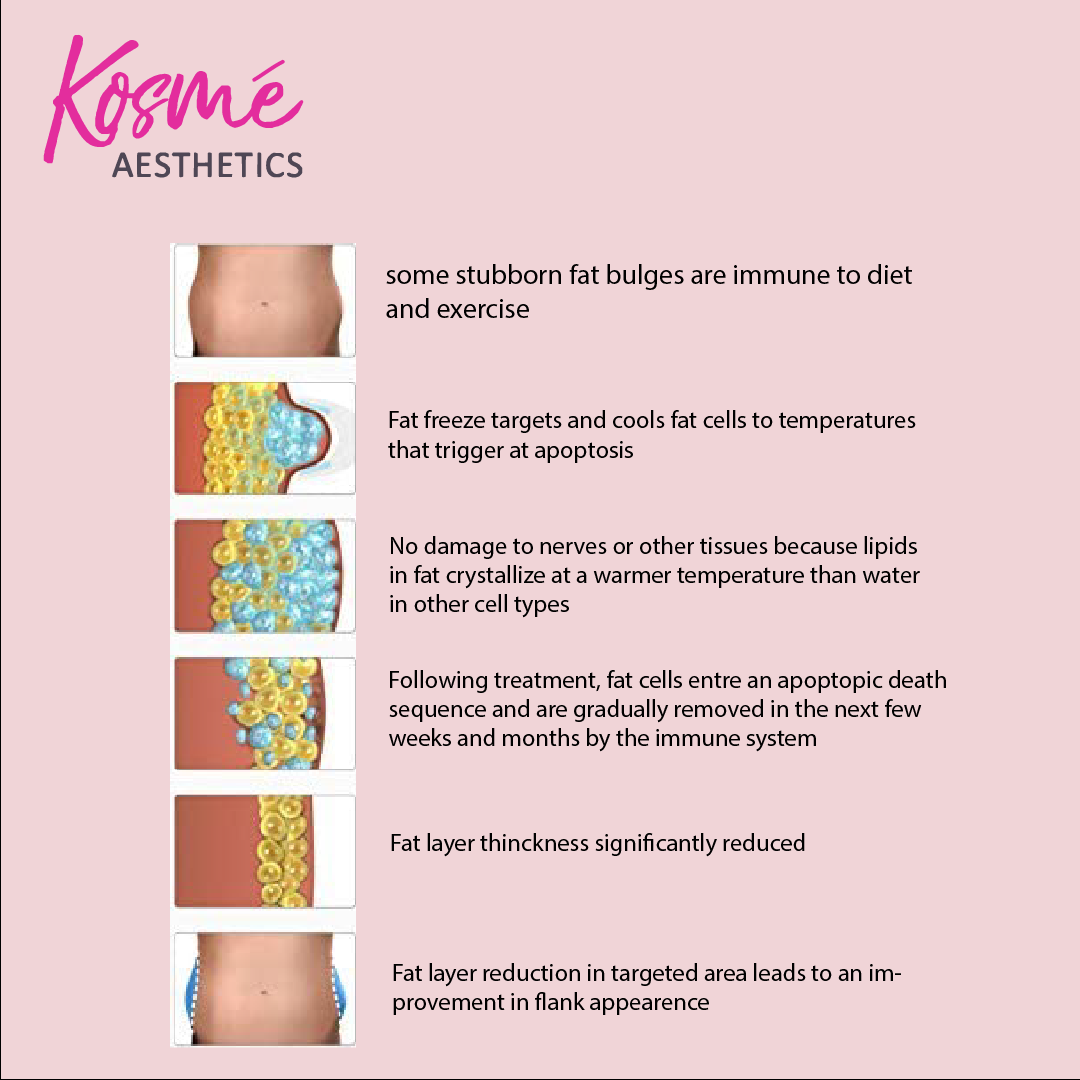
The process called cryolipolysis utilizes controlled cooling to freeze fat in a chosen location.
This light triggers chosen fat cells to create small openings and release several of their contents, thus assisting them reduce in size.
If a client has significant skin redundancy, architectural laxity, or more advanced contour worries, medical fat reduction, lipo, or various other procedures might be more appropriate than non-surgical treatment.
These signals are received and integrated in the hypothalamus and hindbrain and a power space in between hunger and metabolic demands arises and promotes a positive power discrepancy and weight restore. In a previous review (7 ), we summed up the adjustments to energy-restricted weight reduction that are thought to promote weight restore (Fig. 1). This flexible feedback involves collaborated modifications in the brain, intestine, muscular tissue, liver, adipose tissue and neuroendocrine system, which culminate in a collective impact on power balance.This simplistic theory incorporates the long-lasting adipose signals, showing the level of 'stored power', with temporary signals of vitamins and mineral accessibility, which basically show the 'capability to keep energy'. Both signals are basically rooted in the mobile and metabolic accounts of fats. Conceptually, the lasting signals offered by leptin and insulin would certainly develop the international 'anabolic' tone in the hypothalamus, hindbrain and outer cells. In this anabolic context, flowing nutrients and their surrogate neuroendocrine signals would become more important under postprandial conditions and during expanded rounds of overfeeding while the weight is being gained back. The convergence of these long-term and temporary signals in the energy homeostatic circuits of the brain would certainly then dictate the magnitude and perseverance of the power space. Blood was collected from the tail vein at 0, 15, 30, 60, 90 and 120 min and blood sugar concentrations were determined utilizing an Accu-Check Aviva glucometer. Because non-surgical fat reduction treatments vary extensively in mechanism, they might be done by a medical aesthetician, signed up nurse, or surgeon. As a whole, entirely non-invasive treatments (such as CoolSculpting or SculpSure) can be safely executed by an accredited, experienced aesthetician working under doctor guidance. Injectable fat decrease treatments, such as Kybella, need a sophisticated expertise of makeup and ought to be performed only by a qualified cosmetic surgeon or service provider with equivalent training and experience. Non-surgical body contouring consists of much more Vaginal Tightening by LA Lipo experts than fat decrease. Today, you have options to smooth cellulite, tighten skin, invigorate vaginal cells, and get rid of undesirable hair.